FEATURE
Configure policies your way
Integrate tools like MS Presidio, regex rules, or AWS Converse — and more to come! — to detect, redact, or validate information in real time. Fully configurable to your compliance needs.
IN THIS ARTICLE
Modern AI systems process sensitive data constantly — personal information, credentials, financial details, proprietary inputs, and external content. Relying on prompt engineering or downstream filtering is not enough. Controls need to operate at the system level.
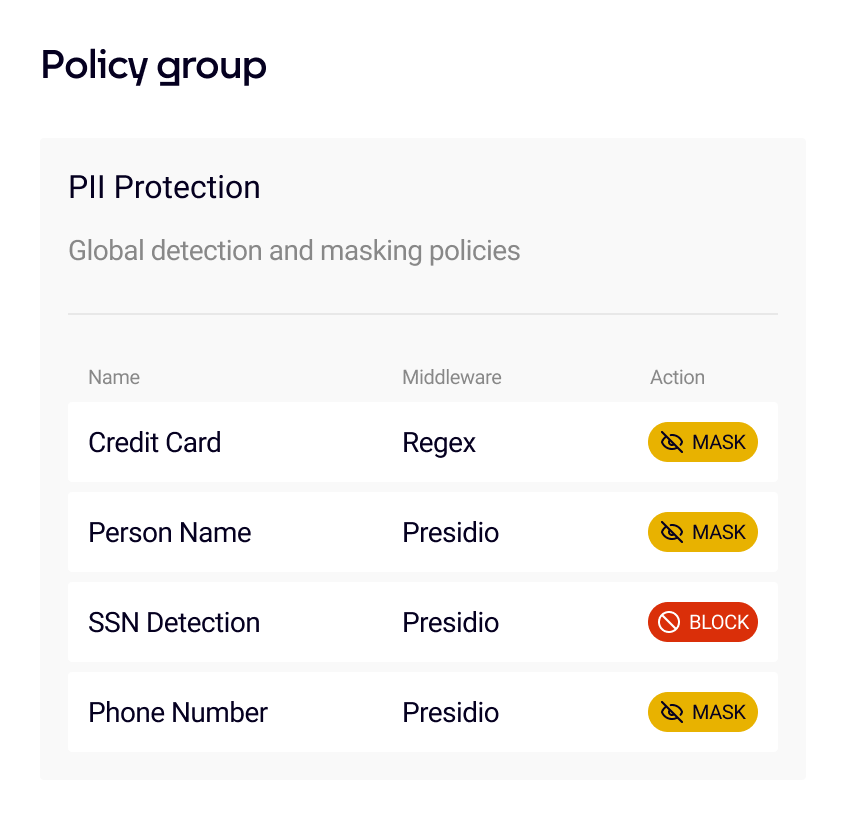
swarmd.ai’s Configurable Policies allow you to integrate detection and validation tools directly into your AI workflow. Whether using MS Presidio, regex-based rules, AWS Converse, or other integrations, policies can be defined to detect, redact, validate, or block information in real time.
The system adapts to your compliance requirements — not the other way around.
What configurable policies mean
Configurable policies are modular enforcement mechanisms that sit between agents and services, inspecting traffic and applying logic before execution.
You define:
- What to detect
- What action to take
- Where the rule applies
- How strict enforcement should be
For example:
- Detect and redact personal data before sending to an external model
- Block prompts containing SQL injection attempts
- Mask financial identifiers in logs
- Validate that outbound data matches compliance constraints
Policies operate automatically and consistently across the platform.
Tool integrations
swarmd.ai supports integration with:
- MS Presidio for PII detection
- Regex-basede rules for custom pattern matching
- AWS Converse and similar services for validation workflows
- Additional integrations as the ecosystem evolves
This modular approach ensures you are not locked into a single detection engine. You can combine tools depending on risk level, regulatory requirements, and performance needs.
How it works
01
Detect risk across every data flow
All inbound and outbound data moving between agents and services is inspected in real time. Detection engines such as MS Presidio, regex rules, or integrated validation tools analyze content for sensitive information, policy violations, or defined risk patterns.
Detection is not limited to a single model or rule type. You can combine multiple engines depending on context, risk level, or regulatory requirement.
The goal is simple: identify and control risk before it propagates.
02
Evaluate every match in context
Once a match is detected, swarmd.ai evaluates it against your defined policy logic.
Policies are not binary switches. They can be:
- Environment-specific — for example, mask PII in development
- Agent-specific — applying stricter controls to external-facing agents
- Rule-priority based — escalating enforcement depending on severity
- Strict or permissive depending on context — such as blocking in production but logging for compliance review
This contextual evaluation allows enforcement to reflect real operational complexity rather than a one-size-fits-all rule set.
03
Enforce policy before execution
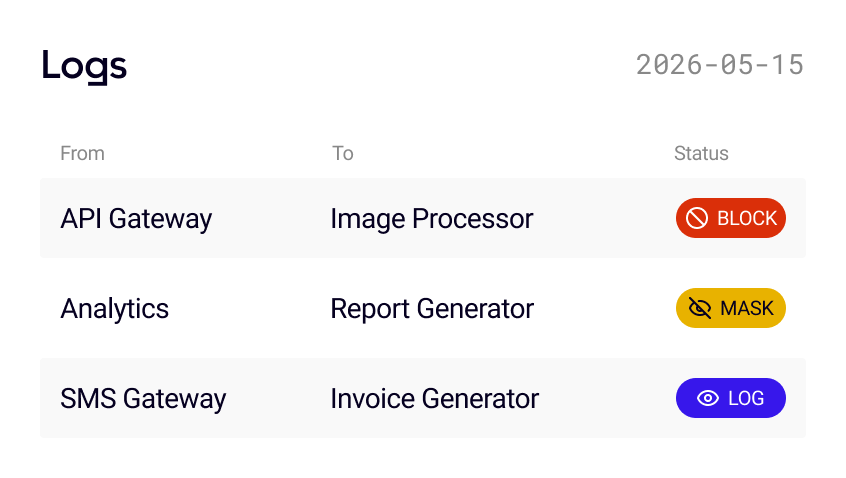
After evaluation, swarmd.ai applies the configured action — mask, block, or log — based on the defined policy. Enforcement occurs before the request continues through the workflow, ensuring sensitive or non-compliant data is handled proactively rather than after execution. No manual review is required unless explicitly configured, allowing protection to operate automatically and consistently at scale.
04
Trace and audit every decision
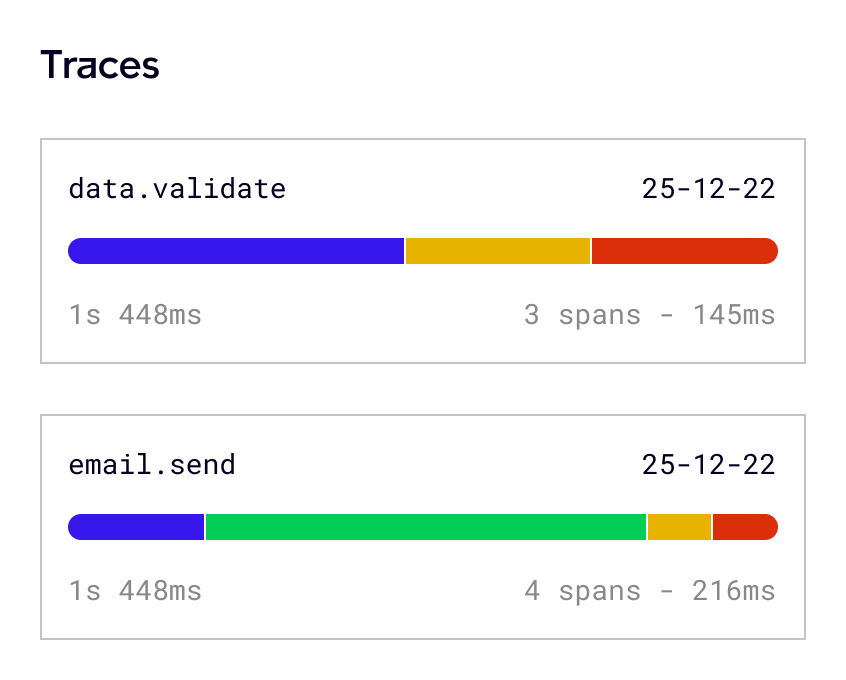
Every detection and enforcement decision is recorded and linked to system activity.
This creates a clear record of:
- What was detected
- Which rule triggered
- What action was taken
- Where it occurred
This ensures policy behavior is transparent, reviewable, and aligned with compliance reporting.
Why it matters
Every organization operates under different regulatory, contractual, and operational constraints. A bank has different requirements than a defense contractor. A healthcare provider faces different risk than a SaaS startup.
Hard-coded guardrails are insufficient.
Configurable policies allow you to:
- Adapt controls to changing regulations
- Implement organization-specific rules
- Scale enforcement without rewriting systems
- Maintain consistency across environments
As regulations evolve, your policy framework evolves with them.
The business case: wreal-time enforcement at scale
Risk is expensive. Data leaks, non-compliant outputs, and policy violations can lead to regulatory fines, contractual breaches, reputational damage, and operational disruption.
Configurable policies reduce that exposure by embedding enforcement directly into AI workflows. Instead of relying on post-incident remediation, you prevent violations before they occur.
From a business perspective, this means:
- Reduced compliance risk
- Faster regulatory readiness
- Lower operational overhead
- Greater customer trust
- Safer scaling of AI systems
Autonomy scales. Accountability must scale with it.
Configurable policies turn governance from a reactive process into a built-in capability. For organizations deploying AI at scale, that shift is foundational.
Learn more
Trace every actionObserve activity in real time without interfering.
Log every eventCapture every interaction in a centralised record.

Audit every changeTrack and verify every system change and action.
Create policyDefine the rules that govern AI.
Settle payments with proofProcess agent transactions with full compliance.
Create legal-grade recordsPreserve tamper-proof, court-admissible records.
Secure every requestVerify every request at every layer.
Keep humans in controlKeep humans in control by enabling review at key decision points.